At its peak, the Rosenwald Schools educated nearly one in three Black children in the United States. Eugene Robinson, Pulitzer Prize–winning columnist and Rosenwald Schools alumnus, moderated a discussion on the schools in Southwest, D.C., late last month. Other graduates and historians also shared their stories, demonstrating how the schools became one of the most transformative educational initiatives in American history.
Doris Dearing Johnson recalls riding eight miles on a “yellow bus with a black fender” to her school in Aberdeen, Mississippi, in the 1950s. Ironically, one of her teachers was the mother of her now life-long friend Vyllorya Evans. Evans says it wasn’t until she saw a film in 1994, and well into adulthood, that she realized the school where her mother taught was a Rosenwald School. Johnson and Evans now serve as co-chairs of the Rosenwald School Initiative of Monroe County, Mississippi.
The schools had various names given to them by the local community. Many of the school’s names were “Biblical,” added Stephanie Deutsch, who is working on a book about the artists and thinkers supported by Rosenwald, including David Driskell, an artist, and Charles Drew, a scientist.
There were schools for Blacks before the Rosenwald schools opened, often built by underfunded Black churches and civic organizations. The 4,978 better-funded Rosenwald schools changed America by helping to fill gaps and address expectations shaped by a history that declared Black literacy illegal.
While Julius Rosenwald provided one-third of the seed money to help fill the gap, he required the local Black community and the White-controlled school board to each provide one-third of the funding. With the states already forcing Blacks to pay taxes to fund schools, Blacks, in essence, were paying an education tax twice.
Joining Rosenwald as the project’s master planner was Booker T. Washington. The Negro Rural School fund, funded by Quaker Anna T. Jeanes, contributed more than one million dollars toward teacher training.


Rosenwald School Discussion: Interracial, Interfaith
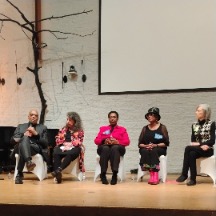
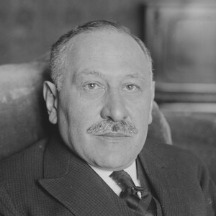
The increased investment in Black public education helped fill a need, but did not close the gap. Johnson recalls getting hand-me-down books from White schools and rolling up paper to make drinking cups.
The interracial and inter-faith collaboration took on a comedic note when “Rosenwald” filmmaker Aviva Kempner said she has been to Westminster Presbyterian this year more than to her synagogue, but was “confident that She knows where I am.”
The National Building Museum in Washington, D.C., opened on February 28 two major exhibitions: “A Better Life for Their Children: Julius Rosenwald, Booker. T Washington and the 4,978 Schools that Changed America, photographs and stories by Andrew Feiler,” and “The Tuskegee Chapel: Paul Rudolph x Fry & Welch,” curated by architect Helen Brown Bechtel.
Note: The Pearl Escape Project sponsored the discussion. Join them for:
Why Don’t Women Vote for Women?
Westminster Church
400 I St, SW
Thu, Mar 19, 7p
Remember the Pearl
Westminster Church
400 I St, SW
Wed, Apr 15, 6p
The Rosenwald Park Campaign is working to establish the Julius Rosenwald and Rosenwald Schools National Park. It would be the first national park to honor a Jewish-American.
The interracial and inter-faith collaboration took on a comedic note when “Rosenwald” filmmaker Aviva Kempner said she has been to Westminster Presbyterian this year more than to her synagogue, but was “confident that She knows where I am.”
The National Building Museum in Washington, D.C., opened on February 28 two major exhibitions: “A Better Life for Their Children: Julius Rosenwald, Booker. T Washington and the 4,978 Schools that Changed America, photographs and stories by Andrew Feiler,” and “The Tuskegee Chapel: Paul Rudolph x Fry & Welch,” curated by architect Helen Brown Bechtel.
Note: The Pearl Escape Project sponsored the discussion. Join them for:
Why Don’t Women Vote for Women?
Westminster Church
400 I St, SW
Thu, Mar 19, 7p
Remember the Pearl
Westminster Church
400 I St, SW
Wed, Apr 15, 6p
The Rosenwald Park Campaign is working to establish the Julius Rosenwald and Rosenwald Schools National Park. It would be the first national park to honor a Jewish-American.


follow us on


Advertisers | Contact Us | Events | Links | Media Kit | Our Company | Payments Pier
Press Room | Print Cover Stories Archives | Electronic Issues and Talk Radio Archives | Writer's Guidelines